Breathe
Regulate the nervous system.
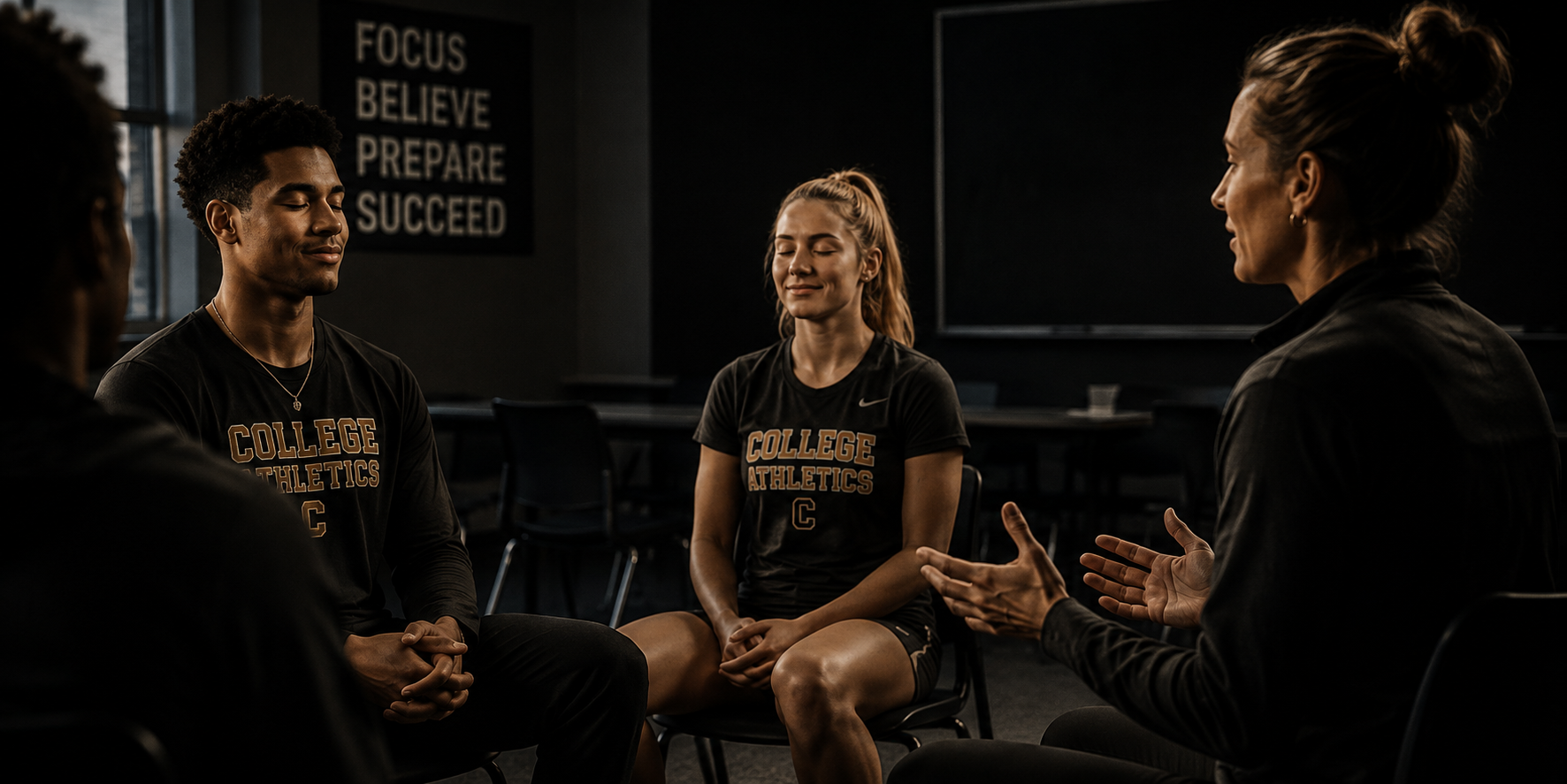
A self care library for athletes, built around one question rather than a schedule. Check in, take the two minutes that fit, and go.
It opens with a question: how are you feeling today? The athlete answers honestly, names what they need, and picks a practice that meets them there and moves them where they want to go.
Every day is different. The framework never changes and the path always does, which is why athletes come back. It is not a course you finish. It is a shelf you reach for.
I feel this. I have that in front of me. I want to feel different. So I use this tool to get there.
The state is the honest bit. An athlete who can name what they are feeling has already done the hard part, and the library does the rest.
Settle brings you back to center so you can keep going.
Activate brings the energy up.
Lock In points your energy at the target.
Let It Go helps you put down what you are carrying.
Power Down helps you let the day go so you can rest.
The state tells you where you are going. The practice type is what gets you there, and every state offers a different blend of the five. That is the engine of the variety.
Regulate the nervous system.
Release and metabolise stress through movement.
Improve sleep, energy and restoration.
Build awareness through journaling and mindfulness.
Strengthen relationships, gratitude and purpose.
How are you feeling today? Overwhelmed, nervous, angry, unmotivated, tired, distracted, excited, sad, stressed, peaceful. Not sure? A short guided body scan helps you name it.
What do you need most right now? Settle, Activate, Lock In, Let It Go or Power Down.
One tool from that state, chosen by the type you want and the time you actually have.
Guided audio, video, movement, or paper and pen. Most run two to five minutes. The longest run twenty.
One line: how do you feel now? This is the part that turns a practice into a skill.
The last step is the one people skip and the one that matters. Noticing that it worked is how it becomes a skill rather than a thing you tried once.
Before the library opens, every athlete does one short orientation. It teaches how to breathe properly, why it is worth doing, and how to find your way around. Ten minutes, once.
Breathing is a trainable skill rather than a mood, and most people have never been taught the mechanics. Four principles carry the whole thing.
In and out through the nose, which filters, warms and humidifies.
Soft and light rather than big and forceful. Less air, not more.
Unhurried, toward a calm cadence. Slower breathing steadies you.
Diaphragmatic and full. The belly and lower ribs move, the chest stays quiet.
Learn it once here, then come back to it any time. It is the home base for everything else in the library.
The honest part. Still Point is guided by a performance and wellness coach, not a doctor, pulmonologist, psychiatrist or psychologist. Everything in it is education and self care. It is not medical or psychological treatment and it is not a replacement for the care of a licensed professional. If you are working with a doctor or a therapist, keep doing that. This works alongside that care, never instead of it.
Talk to your doctor first if any of these apply: a heart or cardiovascular condition or high blood pressure, a history of seizures or epilepsy, diabetes or a thyroid condition, asthma or another respiratory condition, any neurological condition, pregnancy or possible pregnancy, a history of significant trauma or PTSD, or a mental health condition you are managing. None of these necessarily rules breathwork out. It means a quick conversation comes first.
For parents. Young athletes should do this with a parent or guardian's knowledge, and parents should read the safety notes with them. Your sign off matters here, and it is asked for on entry.
If you or someone you know is in immediate danger, contact emergency services, or call or text 988 for the Suicide and Crisis Lifeline.
Founder and head coach at FlyLife, performance and wellness coaching. Josh wrote the curriculum and guides the practices. He is direct about what he is and is not, which is why the safety read above is in his words rather than a lawyer's.
Licensed clinical psychologist and clinical director at After We Play. Lori reviews the program against the standards the rest of the platform is held to, and sets the point at which self care stops and professional care begins.
When something is bigger than a practice can hold, Mindflow is one click away inside your membership.
The question that opens the floor every morning.
Open → Daily, 7:30 amThe Training TableAthlete nutrition that is practical, evidence based and dietitian reviewed.
Open → The open floorThe Inner CircleThe open community at the heart of The Huddle. Anyone can answer, anyone can start a room.
Open → For parentsThe Drive HomeA separate community for the people in the front seat.
Open →Two minutes, whenever you need them. Nothing to keep up with.
Free guide
Tell us who you are and the download opens straight away. No cost, and you can unsubscribe whenever you like.
Ready
It opens in a new tab. We have emailed you a copy to keep as well.
Download the guideNothing happening? Right click the button and choose Save link as.