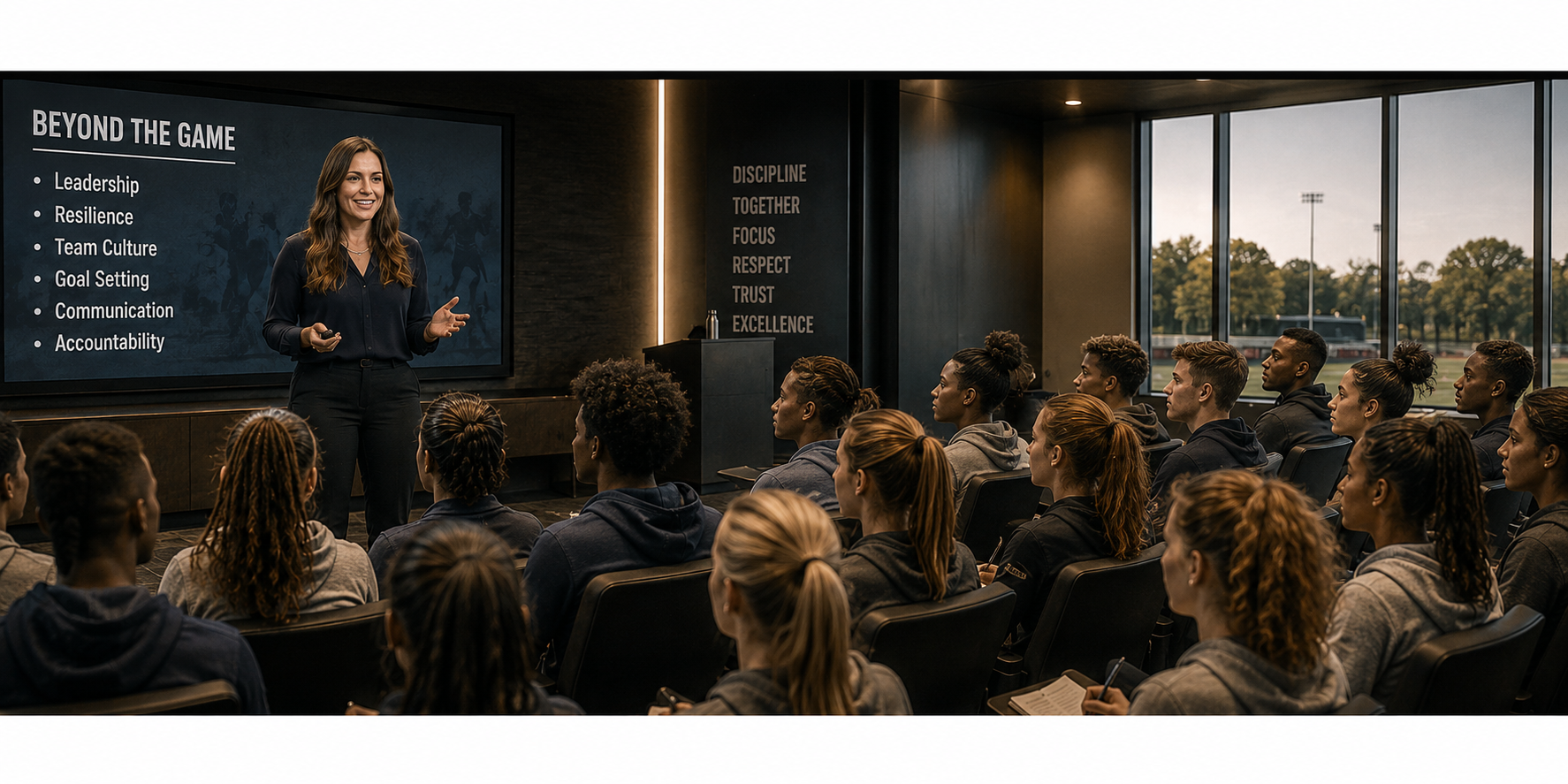
Everyone trainsfor the visible one.
Six sessions on the game nobody coaches: handling the pressure of competition, rebuilding an identity that is not the scoreboard, and being ready for what comes after.
Not tactics.Not drills.
The Invisible Game is about the struggles every athlete has and few of them name. Across six sessions it turns anxiety, burnout and self doubt into something an athlete can work with rather than carry.
- Recognize and manage the pressures of competition that nobody sees
- Rebuild an identity that is not made of statistics, wins and titles
- Build habits for mental health that hold up across a season
- Prepare for the transition into life after sport before it arrives
Winning on the field means little if you are losing off it.
The part of the recordnobody keeps.
Every year athletes leave their sport unprepared for what follows, and the cost of that shows up in the research rather than in the results.
Of current elite athletes, and of former ones, reporting symptoms of anxiety or depression. It does not end when the career does.
Gouttebarge and others, British Journal of Sports Medicine, 2019. A systematic review pooling 2,895 to 5,555 current athletes across 22 studies and 1,579 to 1,686 former athletes across 15.Where suicide now ranks among causes of death in NCAA athletes, behind accidents. It was 7.5% of deaths in the first of the two decades studied and over 15% in the second.
Whelan and others, British Journal of Sports Medicine, April 2024, University of Washington. Twenty years to June 2022, 1,102 athlete deaths.The Invisible Game does not treat any of that as a footnote. It is the reason the program exists.
Six sessions,and what surrounds them.
Six guided sessions
Delivered live or on demand, whichever suits the athlete and the schedule.
A personal workbook
Written exercises that turn each session into something practiced rather than watched.
Resilience and recovery toolkit
Digital tools that stay available after the six sessions are finished.
The peer community
Access to The Huddle, where the same questions are being worked through by other athletes.
Transition planning
Resources for the part nobody prepares for, which is the part that comes after.
Included in every After We Play plan. See the pricing page for what a plan costs.
Anyone carryingmore than they say.
College athletes
Managing pressure through the final seasons, with the end of eligibility in sight.
Professional athletes
Facing burnout, or the identity questions that arrive when performance is the whole job.
Athletes retiring
Preparing for life after sport while there is still time to prepare for it.
Teams and programs
Building a performance culture that does not treat wellbeing as separate from results.
Parents and coaches
The people around the athlete, who usually notice first and have the fewest tools.
Science, storyand support.
The program puts mental performance strategy, sports psychology and reflective storytelling into one framework. Athletes do not just learn it. They practice it, sit with it, and apply it to the season they are actually in.
Built between After We Play and Shark Jockey, around the lived experience of athletes rather than around a theory of them.
The Invisible Game is education, not clinical care. Nothing in it is medical or psychological advice, and it is not a substitute for treatment. When something needs more than a curriculum can give, Mindflow's licensed clinicians are one click away inside the platform.
If you or somebody you know is in immediate danger, contact emergency services, or call or text 988 for the Suicide and Crisis Lifeline.
Your next chapterstarts now.
Fifteen questions will tell you where you actually are before you spend a session finding out.
Free guide
The Complete Athlete
Tell us who you are and the download opens straight away. No cost, and you can unsubscribe whenever you like.
Ready
Your guide is ready.
It opens in a new tab. We have emailed you a copy to keep as well.
Download the guideNothing happening? Right click the button and choose Save link as.