Sport Doesn't Warn You
Manuel Ugarte did not wake up that morning expecting his World Cup to end on a stretcher.
The Manchester United midfielder was in the middle of one of the most important matches of his career. Uruguay versus Spain. Group stage. Everything on the line. His left knee gave way in the first half and he was carried off the pitch. His country's tournament ended with him. The diagnosis confirmed what everyone feared: a torn ACL. Nine to twelve months on the sideline. Just like that, it was over.
A few days later he posted something that stopped a lot of people. Not because it was dramatic. Because it was honest.
“A few days have passed since everything happened. Suffering the most serious injury a footballer can face in one of the most important matches in my country's history, and seeing it end this way without being able to stay on the pitch and support my teammates until the final whistle, is something that will stay with me for the rest of my life.
“Hitting rock bottom will make me stronger in every sense, and I truly believe that's the case here. Without a doubt, when life wants you to stop, it finds a way to let you know. It's up to me to take the positives from this. Success in life is about starting again every time you fall.
“I'm incredibly grateful to the Uruguayan federation and United for being there for me from the moment it happened. A huge thank you as well to my family, my friends, and everyone who has sent me messages of support during this time.”
Rock bottom. Two words. And he said them out loud.
This Is the Part Nobody Prepares You For
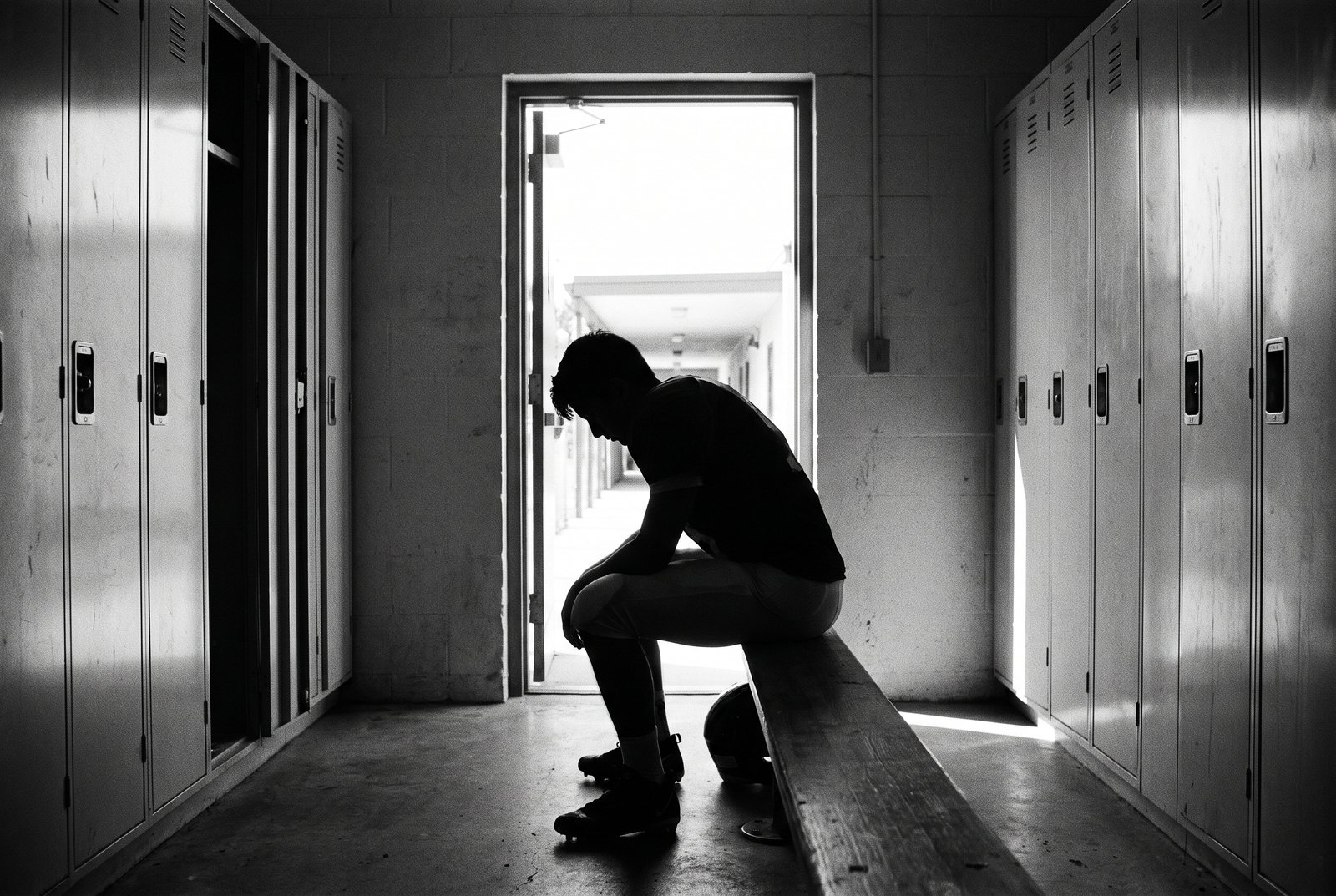
Sport has a way of doing this. It builds you up, gives you identity, routine, purpose. And then one moment, one snap, one phone call, one season ending before it was supposed to, and the floor drops out from under you.
It does not matter if you are a 25 year old professional playing on the biggest stage in the world or a 16 year old club athlete logging miles on a practice field after school. The fall feels the same from the inside. The silence that follows feels the same. The questions feel the same too. Who am I without this? What do I do now? How long before I feel like myself again? Those questions do not care about your level.
Hitting rock bottom will make me stronger in every sense.
Manuel Ugarte
What Ugarte described is not something reserved for elite sport. It is the invisible game that every competitive athlete plays at some point. And almost nobody talks about it.
The body breaks down. The mind follows. And far too often the athlete is completely alone in that space.
The Problem Is Not the Injury
The injury is the event. The real crisis is what happens in the weeks and months that follow.
An athlete who has spent years building their identity around performance suddenly has no performance to anchor to. The structure of daily training disappears. The team dynamic shifts. The sense of purpose gets blurry. And in that blur, a lot of athletes spiral into patterns that have nothing to do with their physical recovery and everything to do with the fact that no one ever gave them the tools to navigate this kind of moment before it arrived.
Ugarte said hitting rock bottom will make him stronger. And maybe it will. He is 25, professional, surrounded by a medical team, and clearly self aware enough to name what he is feeling out loud. That is not nothing.
But what about the athlete who does not have those resources around them? What about the one who has never been taught how to sit with that kind of loss? The one who has never been asked to think about who they are outside of their sport before the sport gets taken away?
This Is Exactly Why After We Play Exists
After We Play was built for this moment. Not after it becomes a crisis. Before.
The work we do inside The Huddle is not crisis intervention. It is preparation. It is the mental and emotional training that happens before the injury, before the tough season, before the identity starts to crack. So that when the floor drops out, the athlete has something real to stand on.
The Invisible Game curriculum gives athletes language for what they are feeling. Still Point programming builds the capacity to sit inside discomfort without being consumed by it. The Athletes Speak library gives every member access to real voices from athletes who have been exactly where they are, so they know they are not the first person to feel this way and they will not be the last.
None of this makes the injury hurt less. None of it erases the grief of watching a season, a tournament, or a chapter of your career disappear without warning.
What it does is give the athlete a foundation that holds when everything else gives way.
Rock Bottom Is Not the End of the Story
What Ugarte said matters well beyond the sports headline. He did not say he was fine. He did not perform resilience for the cameras. He named the feeling and then chose to believe it was not the final word on who he is or what comes next.
That choice is a skill. And like every other skill in sport, it has to be practiced long before you actually need it.
After We Play exists to make sure athletes have already practiced it. So that when the moment comes, and for most athletes some version of that moment will come, they are not starting from zero in the dark.
The floor can drop out in an instant. What you have built before that moment is everything.
Build it before you need it.
The Huddle is where athletes train the part of the game nobody else is coaching. Start with the free assessment and see where you stand today.